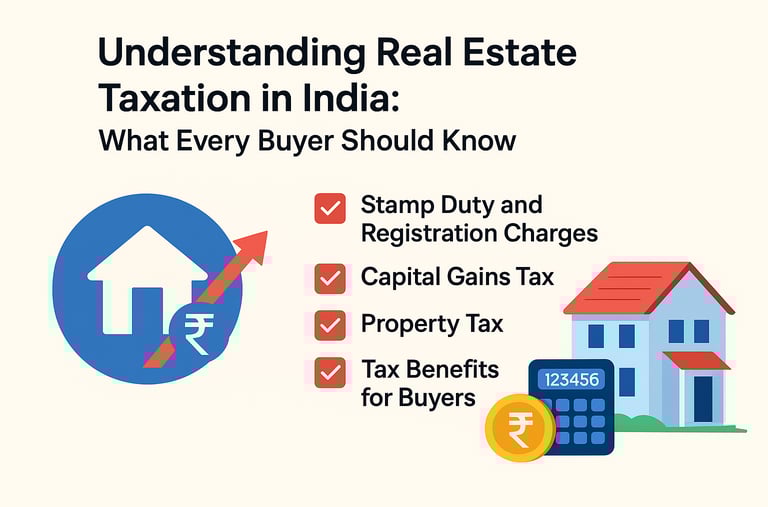
Understanding Real Estate Taxation in India: What Every Buyer Should Know
Buying property is not just about the down payment and loan—it also involves understanding taxation. Real estate taxation in India has undergone several reforms in the last decade, and staying informed helps buyers make smarter financial decisions.
11/7/20251 min read
Stamp Duty and Registration Charges
These are mandatory costs paid during property purchase. In Mumbai, stamp duty ranges between 5–6%, while registration adds 1% of the property value. These costs can significantly impact affordability and should be factored into budgeting.
Capital Gains Tax
If you sell a property, profits earned are subject to capital gains tax. Short-term capital gains (if the property is sold within 24 months) are taxed at your income slab, while long-term capital gains attract 20% with indexation benefits.
Property Tax
Once you own a property, you are required to pay municipal property tax annually. The rates vary by locality, carpet area, and usage (residential vs. commercial).
Tax Benefits for Buyers
The government provides significant relief to homebuyers through deductions under Section 80C (principal repayment up to ₹1.5 lakh) and Section 24(b) (interest repayment up to ₹2 lakh). First-time homebuyers may also qualify for additional benefits.
GST on Real Estate
Under-construction properties attract 5% GST (without input tax credit) and 1% for affordable housing. Ready-to-move-in homes are exempt from GST.
Takeaway
Understanding these tax components ensures better planning and helps buyers maximize benefits while reducing unnecessary costs.
Contact Chembur Property for all your real estate needs, whether it’s finding tax-friendly properties or guiding you through the financial aspects of buying a home.