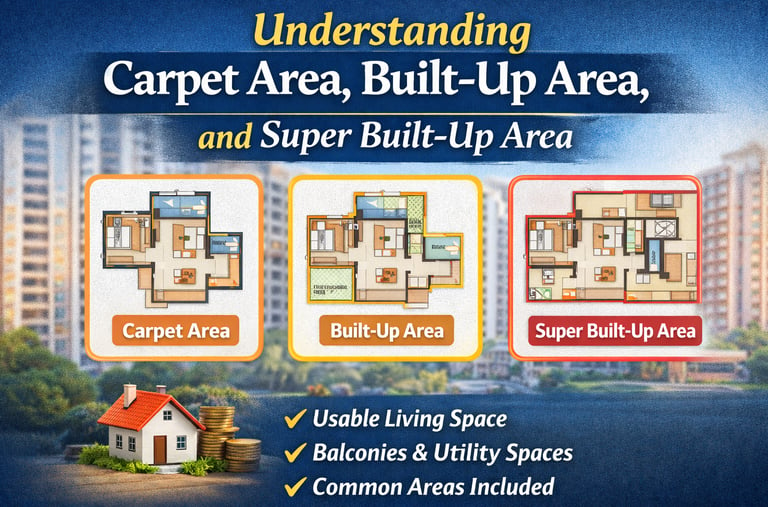
Understanding Carpet Area, Built-Up Area, and Super Built-Up Area
When buying property in today’s competitive real estate market, understanding key space measurement terms is essential. Whether you are investing in a premium apartment, affordable housing unit, or redevelopment project, knowing the difference between carpet area, built-up area, and super built-up area can significantly impact your purchase decision. These terms directly influence property pricing, home loan eligibility, and overall value for money. With increasing transparency under RERA regulations and growing buyer awareness, understanding these concepts has become more important than ever. Here is a clear and practical breakdown of what each term means and how it affects your real estate investment.
2/26/20262 min read
What Is Carpet Area?
Carpet area refers to the actual usable floor space within the walls of an apartment. It is the area where you can literally lay a carpet. This includes:
Living room
Bedrooms
Kitchen
Bathrooms
Internal partition walls
Carpet area excludes external walls, balconies, terraces, common areas, shafts, and utility ducts.
Under current real estate regulations, developers are required to sell apartments based on carpet area, ensuring greater transparency and reducing misleading pricing practices. This has become a trending keyword in property discussions because buyers are increasingly comparing projects based on price per square foot of carpet area rather than super built-up area.
Why it matters: Carpet area determines how much actual usable space you are getting. When comparing properties, always calculate the price per square foot on carpet area for accurate comparison.
What Is Built-Up Area?
Built-up area includes the carpet area plus the thickness of internal and external walls and additional areas such as balconies and utility spaces.
Built-up area generally consists of:
Carpet area
Wall thickness
Balconies
Utility areas
Typically, the built-up area is about 10 to 20 percent larger than the carpet area, depending on construction design and wall thickness.
Why it matters: While built-up area gives a slightly broader picture of total space within the apartment boundary, it still does not include common amenities like lifts, corridors, or clubhouse areas. Buyers often confuse built-up area with usable space, which can lead to unrealistic expectations.
What Is Super Built-Up Area?
Super built-up area is the most comprehensive measurement and includes the built-up area plus a proportionate share of common areas in the building. These common areas may include:
Lobbies
Staircases
Elevators
Clubhouse
Amenities
Corridors
It is often referred to as “saleable area” because developers historically priced apartments based on this measurement. The loading factor—typically ranging from 25 to 40 percent—represents the difference between carpet area and super built-up area.
Why it matters: A higher loading factor means you are paying for more shared spaces relative to your private usable area. In premium residential projects with luxury amenities, the super built-up area may be significantly higher due to larger common facilities.
Key Differences at a Glance
Carpet Area: Actual usable living space inside the apartment.
Built-Up Area: Carpet area plus walls and balconies.
Super Built-Up Area: Built-up area plus proportionate share of common areas.
Understanding these distinctions helps you make informed investment decisions and avoid confusion during negotiations.
Why Buyers Must Focus on Carpet Area
In today’s real estate market, price transparency and value-based buying are major trends. Since regulatory authorities mandate developers to disclose carpet area clearly, it has become the most reliable metric for comparison.
When evaluating properties:
Ask for detailed area break-up.
Calculate price per square foot based on carpet area.
Compare loading percentages across projects.
Assess whether amenities justify higher super built-up area.
Smart buyers prioritise carpet area to determine real space efficiency.
Impact on Investment and ROI
The difference between carpet area and super built-up area directly affects investment returns. A project with lower loading may offer better value, while a development with higher loading might provide superior amenities and lifestyle features.
For rental yield and resale value, practical layout and usable space often matter more than inflated super built-up figures. Efficiently designed apartments with optimal carpet area tend to attract stronger demand.
Conclusion
Understanding carpet area, built-up area, and super built-up area is fundamental when purchasing property. With rising property prices and increasing buyer awareness, evaluating real usable space ensures you get maximum value for your investment.
Always request transparent area calculations, review official documentation, and compare projects based on carpet area pricing. By clearly understanding these measurements, you can make a confident, informed decision and avoid common real estate misconceptions in today’s competitive housing market.