The Role of Chembur’s Public Transport in Real Estate Growth
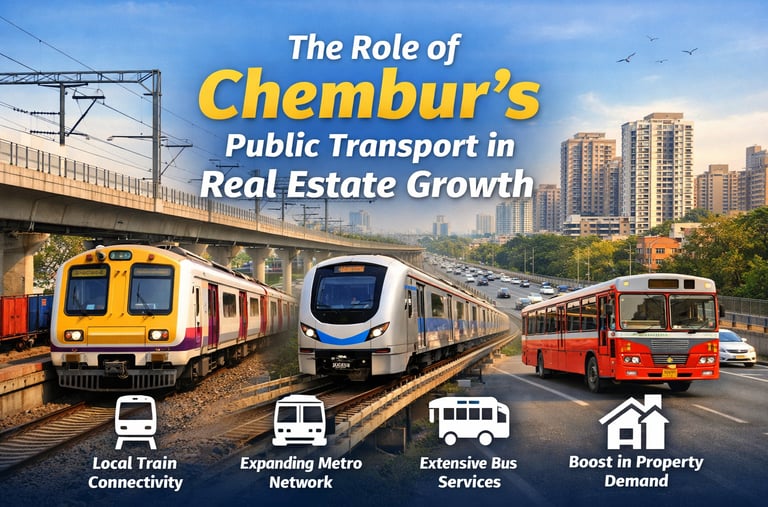
Chembur’s growth as a residential and investment hotspot is closely linked to its excellent public transport connectivity. With multiple modes of transport—including local trains, metro lines, and bus networks—Chembur has become a convenient suburb for professionals, students, and families alike. In 2026, the availability and efficiency of public transport continue to boost residential demand and property appreciation in the area. Here’s how Chembur’s transport network is influencing real estate.
8/10/20262 min read
1. Local Train Connectivity
Chembur is part of Mumbai’s Central and Harbour line network, providing:
Easy access to South Mumbai, CST, and Dadar
Quick connectivity to Kurla, Chembur East, and surrounding suburbs
Frequent trains during peak and off-peak hours
Affordable daily commuting options for professionals and students
This connectivity ensures Chembur residents enjoy fast, reliable, and cost-effective travel across the city.
2. Metro Network Expansion
The metro system has further enhanced Chembur’s appeal:
Metro stations provide swift connections to key business districts
Reduced traffic congestion and shorter commute times
Seamless integration with buses, local trains, and feeder services
Encouragement of sustainable, eco-friendly transport options
Metro connectivity has made areas near stations highly desirable for homebuyers and investors.
3. Bus and Road Networks
Chembur is well-served by bus routes and road infrastructure:
Extensive bus network connecting Chembur to eastern and western suburbs
Proximity to Eastern Express Highway and Santacruz-Chembur Link Road (SCLR)
Smooth travel to BKC, Andheri, Powai, and Navi Mumbai
Access to taxi and auto services for last-mile convenience
The combination of bus, train, and metro options offers residents flexibility and reliability in commuting.
4. Impact on Residential Demand
Public transport infrastructure has a direct influence on Chembur’s real estate:
High demand for apartments near train stations, metro stations, and main roads
Premium pricing for properties with convenient access to transport hubs
Boost in rental yields due to demand from professionals and students
Redevelopment projects near transport corridors enjoy faster sales and higher occupancy
Transport connectivity enhances both the lifestyle and investment potential of Chembur properties.
5. Lifestyle Benefits for Residents
Efficient public transport improves daily life in Chembur:
Reduced dependence on private vehicles and fuel expenses
Shorter travel times enable better work-life balance
Easy access to shopping, schools, hospitals, and entertainment hubs
Encouragement of eco-friendly and sustainable living practices
Residents enjoy convenience and a smoother daily routine thanks to the suburb’s transport infrastructure.
6. Future Prospects
Chembur’s public transport network is set to improve further:
Completion of new metro lines and extensions
Upgraded bus and feeder services connecting remote areas
Development of pedestrian-friendly streets and cycling lanes
Integration of smart transport solutions for safer, faster commuting
These developments will continue to strengthen Chembur’s position as a highly connected residential and investment hub.
Conclusion
Chembur’s robust public transport network—comprising local trains, metro lines, and buses—plays a pivotal role in its residential appeal. Efficient connectivity reduces commute times, enhances lifestyle convenience, and drives property demand.
In 2026, Chembur stands out as a well-connected, commuter-friendly suburb, making it an ideal choice for homebuyers, families, and investors seeking long-term growth.