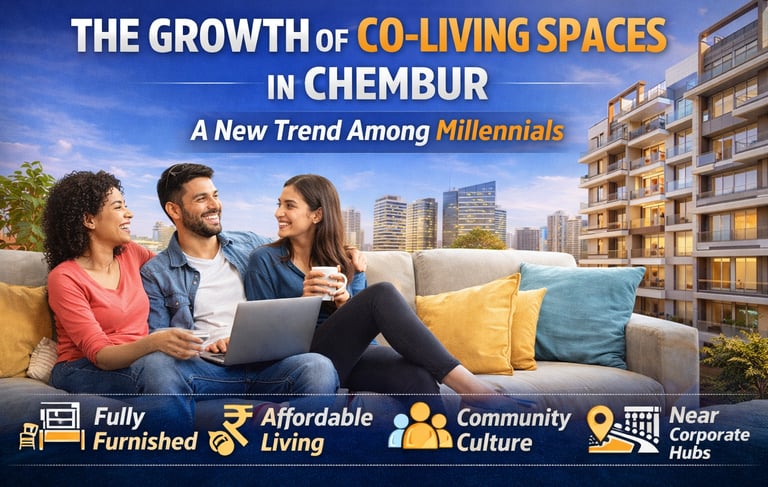
The Growth of Co-living Spaces in Chembur: A New Trend Among Millennials
The real estate landscape in Mumbai is evolving rapidly, and one trend that has gained significant momentum in recent years is co-living. Chembur—already known for its central location, connectivity, and modern redevelopment—is witnessing a sharp rise in this new-age living concept, particularly among millennials and young working professionals.
12/20/20252 min read
Co-living in Chembur is no longer just an affordable accommodation option; it has transformed into a lifestyle choice that blends convenience, comfort, and community living. As more companies adopt hybrid work models and more individuals move to Mumbai for job opportunities, Chembur is becoming a preferred hotspot for co-living.
1. Why Co-living Is Thriving in Chembur
The demand for co-living spaces in Chembur is driven by a combination of factors:
Excellent connectivity to BKC, Lower Parel, Powai, Navi Mumbai, and Andheri
Affordable shared living compared to premium western suburbs
Rise of corporate hiring in nearby hubs
Safe, walkable neighbourhoods
High-quality rental inventory from redeveloped towers
For millennials, convenience and community matter as much as affordability—and Chembur delivers both.
2. Modern, Fully Furnished Spaces Tailored for Millennials
Today’s co-living units in Chembur are nothing like traditional PG accommodations. The new co-living setups offer:
Fully furnished rooms
High-speed Wi-Fi
Housekeeping services
Common lounges
Community kitchens
Laundry services
Gym and recreation access
Security-controlled entry
These amenities create a plug-and-play living environment that is perfect for millennials who want a hassle-free lifestyle without the responsibilities of long-term leases or maintenance.
3. Community Living and Networking Opportunities
One of the biggest attractions of co-living is the sense of belonging it creates. Millennials, especially those who move to Mumbai for work, often seek opportunities to build friendships, network, and socialize. Co-living spaces regularly organize:
Movie nights
Fitness sessions
Networking events
Community dinners
Workshops and skill-sharing sessions
Chembur’s friendly neighbourhood culture blends beautifully with these shared living environments, making it easy for individuals to adjust and feel at home.
4. Cost-Effective Compared to Individual Rentals
Renting a full 1 BHK or studio apartment in Mumbai can be expensive, especially for newcomers. Co-living offers:
Lower monthly costs
Zero or minimal deposits
Shared utility expenses
Access to amenities at no extra cost
This cost-efficiency makes co-living the ideal choice for young professionals, freelancers, and students who want a premium living experience without stretching their budgets.
5. Proximity to Corporate Hubs and Educational Institutions
Chembur enjoys strategic proximity to major commercial zones such as:
Bandra Kurla Complex (BKC)
Wadala commercial district
Lower Parel business hubs
Powai tech parks
Navi Mumbai IT parks
This geographical advantage reduces travel time and improves work-life balance—a top priority for the younger generation.
Additionally, several colleges and institutes around Chembur attract students who prefer co-living for short-term and semi-permanent stays.
6. Increasing Developer Participation
Seeing the rising demand, real estate developers and rental operators are now creating dedicated co-living towers and shared units in Chembur. This includes:
Boutique co-living studios
Shared 2 BHK and 3 BHK apartments
Dedicated rental floors within high-rise towers
Hybrid co-working + co-living space designs
This growth ensures the supply of high-quality co-living inventory that meets modern standards.
7. Future of Co-living in Chembur
With rising job opportunities across Mumbai, hybrid work models, and shifting lifestyle preferences, the co-living market in Chembur is expected to expand even further. Increasing digital adoption, smart-home features, and flexible rental contracts will make co-living even more appealing in the coming years.
Conclusion
Co-living is reshaping the rental ecosystem in Chembur, offering millennials a lifestyle that blends affordability, comfort, and community. With its central location, safe environment, modern housing, and vibrant social scene, Chembur is perfectly positioned to lead this trend in Mumbai.
As more young professionals flock to the city, co-living in Chembur will continue to rise—transforming the suburb into a thriving hub for modern, community-driven urban living.