The Future of Co-Living: Why Millennials and Gen Z Are Choosing Shared Spaces
Co-living has become one of the fastest-growing housing models in India, driven primarily by Millennials and Gen Z. These younger generations prefer flexibility, convenience, and community—values that traditional rental models struggle to provide. As more young professionals enter the workforce and migrate to urban cities, co-living has emerged as a modern solution offering everything they need under one roof.
5/8/20261 min read
Affordability and all-inclusive pricing
Co-living simplifies monthly expenses by offering an all-inclusive package covering rent, utilities, WiFi, housekeeping, and maintenance. This makes budgeting easier for working individuals who don’t want the stress of dealing with landlords or unexpected bills.
Community-driven lifestyle
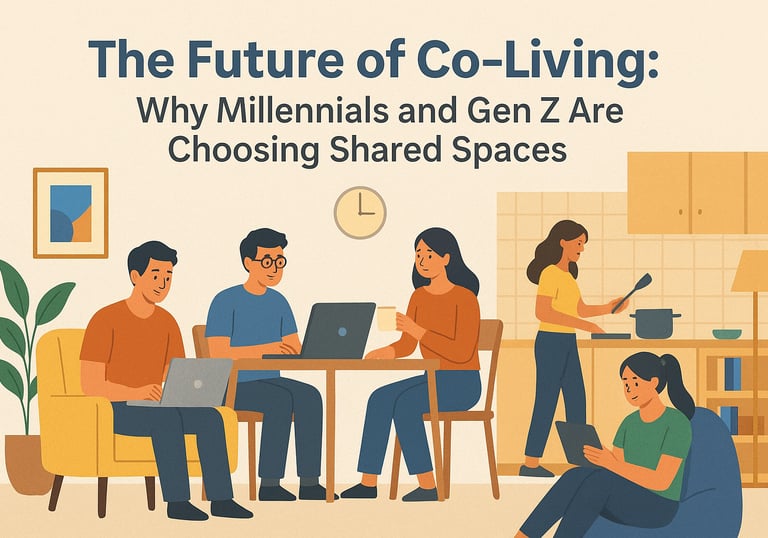
Co-living spaces emphasize shared amenities—lounges, gaming zones, kitchens, and coworking areas. This creates a sense of community where residents can interact, network, and build meaningful connections. For younger residents who often move far from home, this social aspect is highly valuable.
Flexibility and zero maintenance
Unlike traditional rentals that require deposits, lock-in periods, and furnishing costs, co-living offers flexibility with short-term contracts and ready-to-move-in furnished rooms. Tenants avoid hassles like repairs, cleaning, and handling utility services.
Ideal for hybrid workers and startup professionals
With the rise of remote and hybrid work, co-living provides dedicated workspaces, high-speed internet, and a productive yet social environment. Startups and freelancers benefit from the collaborative culture.
Co-living is more than an affordable housing option; it’s a lifestyle solution for the modern young generation.