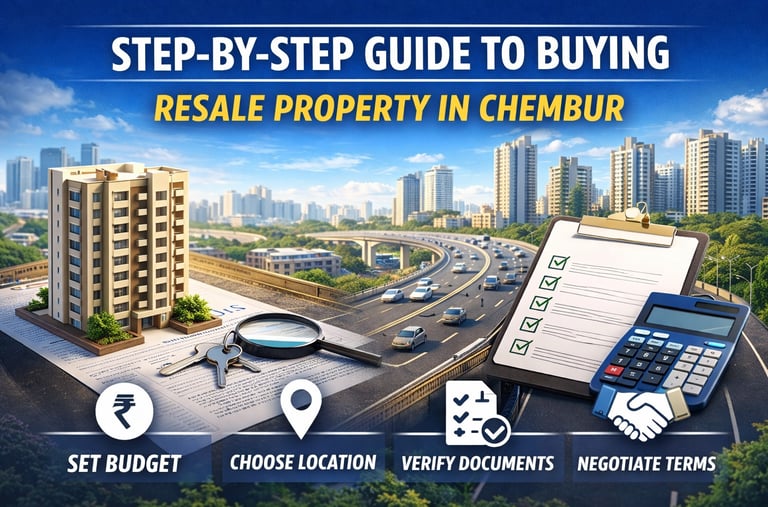
Step-by-Step Guide to Buying Resale Property in Chembur
Buying a resale property is a popular choice among homebuyers in Chembur, especially those seeking established neighbourhoods, immediate possession, and better negotiation opportunities. With Chembur’s strong connectivity, mature social infrastructure, and steady property appreciation, the resale market offers attractive options for both end users and investors. This step-by-step guide outlines everything you need to know before purchasing a resale home in Chembur in 2026
8/14/20262 min read
Step 1: Define Your Budget and Requirements
The first step in buying a resale property is determining your total budget. This includes the property price, stamp duty, registration charges, brokerage fees, and potential renovation costs. Buyers should also factor in ongoing maintenance expenses and society charges.
Clearly defining your requirements such as configuration, carpet area, floor preference, parking, and proximity to transport hubs helps narrow down suitable options and saves time during the search process.
Step 2: Choose the Right Micro-Location in Chembur
Chembur offers a variety of residential pockets, each with distinct advantages. Selecting the right micro-location is critical for long-term value and daily convenience. Areas close to railway stations, metro corridors, and major roads typically offer better connectivity and resale value.
Buyers should also evaluate access to schools, hospitals, markets, and recreational spaces. An established neighbourhood with good infrastructure generally ensures better liveability and future appreciation.
Step 3: Shortlist Properties and Inspect Thoroughly
Once you identify suitable options, conduct detailed property inspections. Assess the building’s condition, age, maintenance standards, and overall upkeep. In resale properties, checking for water seepage, structural wear, electrical fittings, and plumbing is essential.
Evaluate the society’s amenities, security arrangements, parking availability, and common areas. Speaking to residents can provide insights into society management and living conditions.
Step 4: Verify Legal Documents Carefully
Legal due diligence is one of the most important steps when buying a resale property. Ensure the seller has clear ownership and that the property has a clean title. Verify essential documents such as the sale deed, share certificate, occupancy certificate, and society records.
Buyers should also check for any pending dues, mortgages, or legal disputes related to the property. Engaging a legal professional can help identify risks and ensure compliance with all regulations.
Step 5: Negotiate the Price and Terms
One of the key advantages of buying a resale property is price negotiation. Market conditions, property age, renovation requirements, and seller urgency can influence pricing.
Buyers should conduct a comparative market analysis to understand prevailing property rates in the area. Negotiating payment schedules, possession timelines, and included fittings can further enhance the value of the deal.
Step 6: Arrange Home Loan and Financial Planning
If you plan to finance the purchase through a home loan, initiate discussions with banks or financial institutions early. Loan approval for resale properties depends on the property’s legal status, age of the building, and valuation.
Ensure that your loan eligibility, interest rates, and repayment terms align with your financial goals. Maintaining proper documentation and a good credit profile helps streamline the loan process.
Step 7: Complete Registration and Take Possession
Once the agreement is finalised, proceed with stamp duty payment and property registration. Ensure that all documents are executed correctly and that possession is handed over as per the agreed terms.
After registration, update society records, transfer utility connections, and complete any renovation work before moving in.
Conclusion
Buying a resale property in Chembur can be a rewarding decision when approached systematically. With established neighbourhoods, strong connectivity, and stable market demand, resale homes offer immediate usability and long-term value. By following a step-by-step approach that includes careful budgeting, location selection, legal verification, and negotiation, buyers can secure a resale property that meets both lifestyle and investment objectives in 2026.