Rental Yield Trends in Chembur — What Renters and Investors Should Know
Chembur has rapidly grown into one of Mumbai’s most attractive rental hubs, driven by its central location, strong connectivity, and lifestyle-friendly neighbourhoods. Whether it’s working professionals, families, or students, the suburb appeals to different tenant categories — leading to consistent rental demand and stable yields. For investors and renters alike, understanding current rental yield trends in Chembur helps in making informed decisions. Here’s a detailed breakdown of what to expect from Chembur’s rental market in 2025.
12/13/20252 min read
1. Why Chembur Has Strong Rental Demand
Chembur’s strategic location between South Mumbai, Navi Mumbai, and Central Suburbs makes it a natural choice for tenants looking for shorter commutes. With access to the Eastern Freeway, SCLR, Monorail, Harbour Line, and the upcoming Metro Lines, mobility has become one of its biggest strengths.
Key reasons for rental demand:
Proximity to BKC, Lower Parel, and Powai.
Strong presence of schools, hospitals, markets, and restaurants.
Popular residential pockets like Sindhi Society, Pestom Sagar, and Chembur East offer secure living for families.
Rise of new redevelopment projects with modern amenities.
This combination ensures that Chembur always maintains a steady inflow of tenants.
2. Current Rental Yield Trends
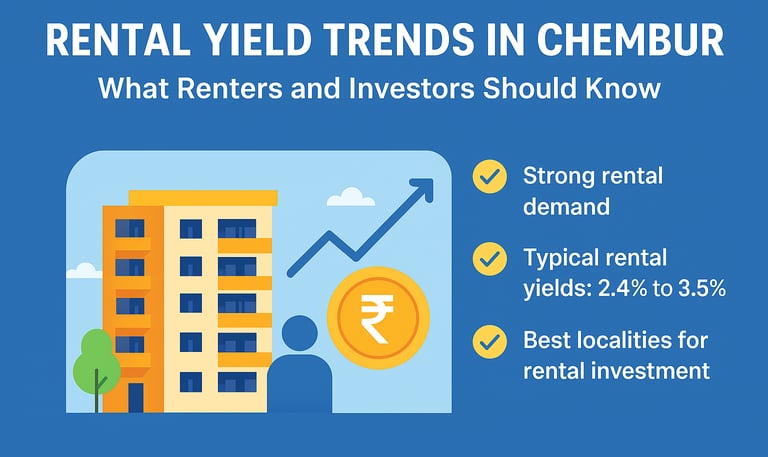
On average, Chembur offers rental yields ranging from 2.4% to 3.5%, depending on the location, building amenities, and property type. This is higher than many South Mumbai areas and comparable to leading suburban micro-markets.
Typical Monthly Rental Range in Chembur:
1 BHK: ₹35,000 – ₹55,000
2 BHK: ₹55,000 – ₹95,000
3 BHK: ₹1,00,000 – ₹1,80,000
Luxury projects: ₹2 lakh+ depending on amenities & views
Yield Trend Summary:
Older buildings offer better rental yields due to lower purchase prices.
New launches offer slightly lower yields initially but better appreciation.
Properties close to Eastern Express Highway and BKC connector see the highest occupancy rates.
3. Best Localities for Rental Investment
Chembur has a mix of mid-range and premium neighbourhoods that perform exceptionally well in rentals:
✔ Pestom Sagar
High demand from families and professionals due to clean lanes, greenery, and schools.
✔ Chembur East
Best for working professionals commuting to BKC and Navi Mumbai.
✔ Sindhi Society
Preferred by families due to large community living, safety, and cultural comfort.
✔ Chembur Camp & Shell Colony
Budget-friendly rental hotspots with excellent connectivity.
✔ Deonar
Close to Tata Institute of Social Sciences (TISS), making it a strong student rental zone.
4. Who Typically Rents in Chembur?
Understanding tenant profiles helps investors choose the right property.
Most common renters:
Corporate professionals working in BKC & Lower Parel.
Families seeking proximity to good schools.
Students from TISS & nearby institutes.
NRIs returning for short-term city stays.
New couples preferring mid-range modern apartments.
This diverse tenant base ensures high occupancy rates throughout the year.
5. Tips for Investors to Maximize Rental Yield
To generate the best returns in Chembur:
Choose a building with amenities
Gym, security, parking, and play areas help in fetching higher rent.
Invest near transport corridors
Metro stations, Monorail, Eastern Freeway, and SCLR enhance demand.
Offer semi-furnished units
Wardrobes, modular kitchens, and ACs attract quality tenants quickly.
Target long-term tenants
Families offer consistent rental income with fewer vacancies.
Conclusion
Chembur’s rental market is strong, diverse, and future-ready. With upcoming metro lines, increased redevelopment, and rising commercial hubs nearby, rental yields are expected to grow gradually over the next few years. For investors, Chembur provides an excellent balance of steady income and long-term appreciation. For renters, it offers convenience, safety, and a lifestyle that’s hard to match within Mumbai’s central suburbs.