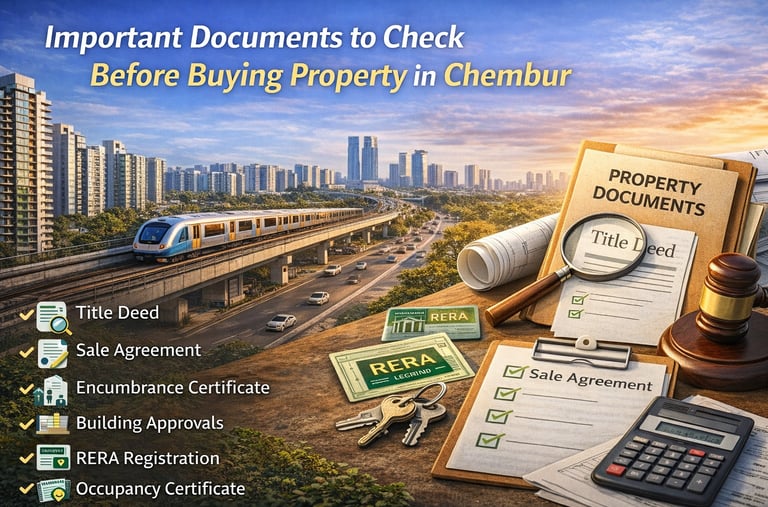
Important Documents to Check Before Buying Property in Chembur
Buying property in Chembur, one of Mumbai’s rapidly growing residential hubs, is a significant financial decision. With rising property appreciation, redevelopment projects, and strong infrastructure growth, Chembur has become a preferred destination for homebuyers and investors. However, before finalising a deal, it is crucial to verify all legal and technical documents to avoid future disputes or financial risks. This guide outlines the important documents you must check before buying property in Chembur to ensure a secure and legally compliant transaction.
2/23/20263 min read
1. Title Deed and Ownership Verification
The title deed is the most critical document in any property transaction. It establishes the legal ownership of the property and confirms the seller’s right to transfer it. Ensure that:
The title is clear and marketable.
The seller has undisputed ownership rights.
There are no legal disputes or claims on the property.
It is advisable to verify the title history for the past 20 to 30 years to ensure there are no pending encumbrances or ownership conflicts. A property with a clear title increases resale value and simplifies home loan approval.
2. Encumbrance Certificate
An encumbrance certificate confirms that the property is free from financial liabilities such as loans, mortgages, or legal dues. This document ensures that the property has no outstanding debts attached to it.
Before purchasing a flat in Chembur, especially in redevelopment projects or resale transactions, request the encumbrance certificate to safeguard against hidden liabilities.
3. Approved Building Plan
Verify that the building plan has been approved by the local municipal authority. This ensures that the construction complies with zoning regulations, building codes, and safety standards.
In a suburb like Chembur, where redevelopment activity is prominent, it is important to confirm that the developer has received proper approvals before starting construction. Buying property without approved plans can lead to legal complications and potential demolition risks.
4. Occupancy Certificate and Completion Certificate
If you are buying a ready-to-move apartment, check for:
Completion Certificate (CC): Confirms that construction is completed as per approved plans.
Occupancy Certificate (OC): Certifies that the building is fit for occupation and complies with safety norms.
Without an occupancy certificate, you may face difficulties in obtaining water, electricity, and other civic services. It can also affect resale value and home loan eligibility.
5. RERA Registration Details
Under current real estate regulations, all new residential projects must be registered with the Real Estate Regulatory Authority (RERA). Verify the project’s RERA registration number and review the project details, delivery timelines, and compliance status.
RERA registration increases transparency, protects buyer interests, and ensures that developers adhere to declared commitments. In Chembur’s competitive real estate market, investing in RERA-registered projects adds an extra layer of security.
6. Sale Agreement and Allotment Letter
The sale agreement outlines the terms and conditions of the property purchase, including payment schedule, possession timeline, penalties for delays, and specifications of the apartment.
Carefully review:
Carpet area details
Total cost breakdown
Maintenance charges
Additional fees and taxes
An allotment letter issued by the developer confirms the allocation of a specific unit to the buyer and mentions payment terms.
7. Land Use and Zoning Clearances
Confirm that the land on which the property is built is approved for residential use. Zoning clearances ensure that the property complies with city planning regulations. This is particularly important in urban areas experiencing rapid development like Chembur.
8. Society Documents (For Resale Properties)
If you are purchasing a resale flat, verify:
Society share certificate
No Objection Certificate from the housing society
Maintenance dues clearance
These documents confirm that the previous owner has cleared all dues and that the society has no objection to the transfer of ownership.
9. Home Loan Pre-Approval and Bank Verification
If you are applying for a home loan, most banks conduct independent legal and technical verification of the property. Opting for a property approved by reputed banks reduces risk, as lenders verify legal documents before sanctioning loans.
10. Stamp Duty and Registration Records
Ensure that the property is properly registered with the relevant authority and that stamp duty has been paid. Registered property documents serve as legal proof of ownership and are essential for future resale or inheritance.
Conclusion
Purchasing property in Chembur offers strong investment potential due to infrastructure growth, metro connectivity, and rising residential demand. However, thorough document verification is essential to avoid legal complications and financial risks. From title deeds and encumbrance certificates to RERA registration and occupancy certificates, each document plays a crucial role in safeguarding your investment.
Engaging a qualified legal expert and conducting due diligence ensures a smooth and secure property transaction. By carefully reviewing these important documents, you can confidently invest in Chembur’s thriving real estate market and secure long-term value for your future.