How Infrastructure Upgrades (Metro, Roads, Flyovers) Are Transforming Chembur
Chembur has emerged as one of Mumbai’s most promising residential and investment destinations, largely due to significant infrastructure upgrades in recent years. With strategic enhancements in metro connectivity, road networks, and flyovers, Chembur is undergoing rapid transformation that is reshaping travel patterns, lifestyle demands, and property values. This blog explores how these infrastructure developments are influencing urban mobility, residential demand, and real estate trends in Chembur in 2026.
1/21/20263 min read
Metro Connectivity: A Game Changer for Commuters
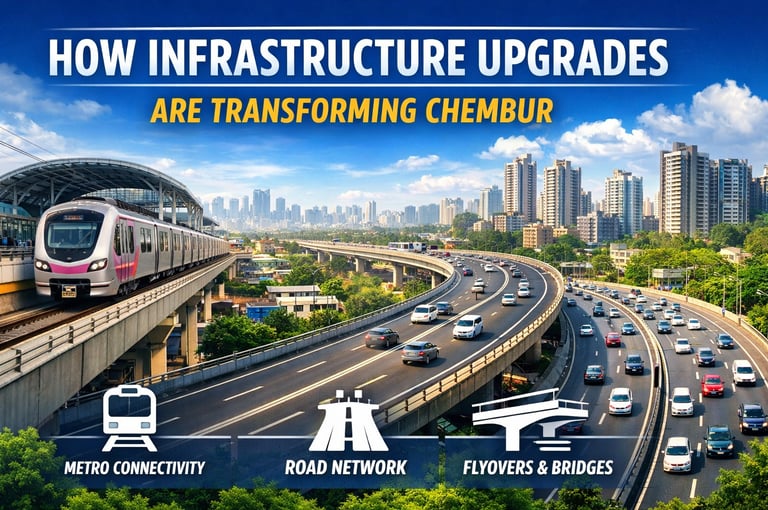
One of the most influential developments in Chembur’s growth story is the expansion of metro infrastructure. The introduction and extension of metro lines in Chembur have drastically improved east-west and north-south connectivity across the city. Metro connectivity has become a strong driver of property demand because it significantly reduces travel times and enhances convenience for daily commuters.
Residents now enjoy faster access to business districts, commercial centres, and educational institutions without relying solely on road transport. Metro stations have become focal points for transit-oriented development, leading to higher real estate interest and increased demand for residential properties in nearby areas.
The presence of metro connectivity also appeals to working professionals who prioritise seamless mobility. As a result, localities around upcoming and operational metro stations have experienced heightened demand, stronger rental interest, and improved property valuations.
Road Network Enhancements: Enhancing Urban Mobility
Chembur’s road network has seen substantial improvements, including widening of key arterial roads, better traffic management systems, and enhanced integration with major highways. These upgrades have not only eased daily commuting but have also improved connectivity to central Mumbai and surrounding suburbs.
The Santacruz–Chembur Link Road, one of the most significant road projects in the region, has greatly reduced travel time between Chembur and western suburbs, improving access to commercial hubs and lifestyle destinations. This has made Chembur an attractive choice for homebuyers seeking a balanced work-life commute.
Improved road networks have also encouraged greater vehicular movement and easier accessibility for public transport services, which in turn enhances the suburb’s overall connectivity footprint. This is a major factor contributing to Chembur’s appeal as a residential destination with efficient travel links to major employment zones.
Flyovers and Elevated Corridors: Reducing Congestion
Flyovers and elevated corridors have played a critical role in decongesting traffic and streamlining movement within Chembur. Strategic construction of flyovers at major junctions has eased bottlenecks, particularly during peak travel hours. This has improved road safety, reduced travel stress, and enhanced overall quality of life for residents.
The improved flow of traffic has further boosted commuter confidence, making daily travel more predictable. For property investors and homebuyers, enhanced traffic management through flyovers has made Chembur more liveable, reinforcing its position as a suburb with balanced infrastructure excellence.
Impact on Real Estate Values and Demand
Infrastructure upgrades in Chembur have substantially boosted real estate values across the suburb. Improved connectivity typically drives higher demand, which translates into stronger capital appreciation over time. Localities close to metro stations, major roads, and flyovers have seen heightened interest from buyers and investors alike.
Residential properties in well-connected pockets often command premium pricing compared to areas with limited access. This price differential reflects the evolving preferences of homebuyers who prioritise ease of commute, access to urban amenities, and future resale potential.
Investors seeking long-term gains also view infrastructure-driven growth as a fundamental criterion when evaluating investment opportunities. Chembur’s ongoing development trajectory positions it as a robust choice for both end users and portfolio investors.
Lifestyle Transformation and Social Development
Beyond transportation, infrastructure upgrades contribute to broader lifestyle enhancements in Chembur. Improved mobility supports access to healthcare facilities, educational institutions, entertainment zones, and recreational spaces. This holistic development improves the suburb’s liveability index and attracts families seeking a balanced lifestyle.
Upgraded infrastructure also encourages commercial activity, leading to new retail hubs, dining options, and community spaces. This, in turn, stimulates micro-economic growth and enhances the overall appeal of the suburb as a vibrant urban centre.
Conclusion
Infrastructure upgrades in Chembur, including metro connectivity, road network improvements, and flyovers, have significantly transformed the suburb’s real estate landscape and urban dynamics. These developments have catalysed growth, improved commuting patterns, and enhanced property demand in strategically connected localities.
As Chembur continues to evolve with smart infrastructure planning and urban development, its appeal to homebuyers, tenants, and investors remains strong. The suburb’s transformation reflects a broader trend in Mumbai’s real estate market, where integrated infrastructure and urban mobility drive sustainable growth and lifestyle convenience.