How Infrastructure Development Impacts Property Appreciation in Chembur
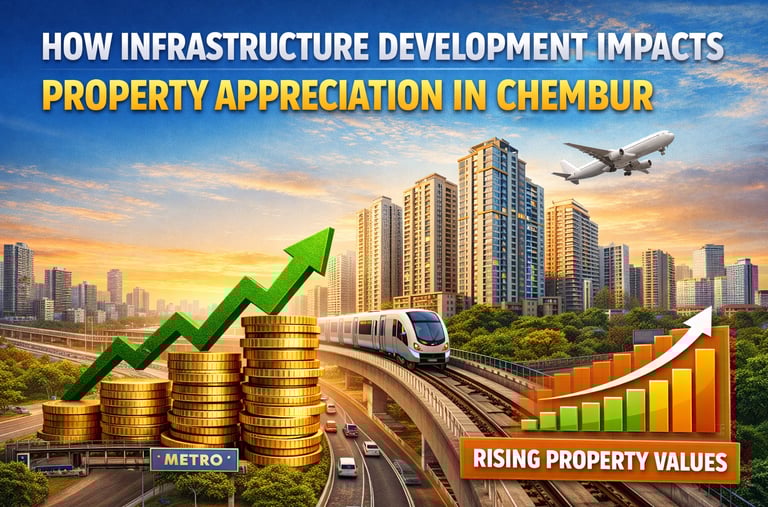
Chembur has emerged as one of Mumbai’s fastest-growing residential destinations, largely driven by continuous infrastructure development. Over the past decade, the suburb has transformed from a relatively quiet residential zone into a well-connected urban hub. Improved transportation networks, modern civic infrastructure, and proximity to commercial business districts have significantly influenced property appreciation in Chembur. As infrastructure expansion continues, the suburb is witnessing rising housing demand and strong real estate growth potential.
2/16/20262 min read
Infrastructure as a Key Real Estate Growth Driver
Infrastructure development plays a crucial role in determining property values in urban markets. Improved connectivity reduces travel time, enhances accessibility to workplaces, and increases the overall livability of a neighbourhood. In Chembur, infrastructure upgrades have not only improved daily commuting convenience but have also attracted homebuyers and investors looking for long-term capital appreciation.
The suburb’s strategic location provides easy connectivity to South Mumbai, Navi Mumbai, and major commercial districts. As infrastructure continues to expand, Chembur is becoming a preferred residential choice for professionals working in business hubs while seeking balanced urban living.
Major Infrastructure Projects Driving Property Appreciation
Several large-scale infrastructure projects have played a significant role in enhancing Chembur’s real estate demand. Improved road connectivity has drastically reduced travel time between Chembur and key business districts. This improvement has increased the suburb’s attractiveness for professionals working in commercial zones.
Enhanced east-west connectivity has also strengthened accessibility to western suburbs and employment hubs. Improved transportation corridors have led to increased housing demand, particularly from working professionals seeking well-connected residential areas.
The expansion of metro connectivity is expected to further transform Chembur’s accessibility. Metro infrastructure reduces dependence on road transport and significantly improves public transit efficiency, which directly impacts residential demand and property price growth.
Additionally, large-scale connectivity projects linking Mumbai with Navi Mumbai are expected to create new commercial opportunities while boosting residential demand in Chembur due to its strategic location between major economic zones.
Impact on Residential Demand and Property Prices
Infrastructure development has a direct correlation with property appreciation. Improved accessibility encourages homebuyers to consider locations that were previously perceived as distant or less convenient. Chembur has benefited from this shift, witnessing increased demand for both mid-segment and premium housing.
Redevelopment projects are also gaining momentum as infrastructure growth enhances land value. Older residential societies are being replaced with modern high-rise developments offering lifestyle amenities, better layouts, and improved construction quality. These projects attract both end-users and investors, further strengthening price growth.
Properties located near metro stations, major roads, and transit corridors typically experience faster appreciation due to high accessibility. In Chembur, micro-markets near transport infrastructure have shown consistent price growth, making them attractive for long-term investment.
Commercial Growth and Lifestyle Enhancement
Infrastructure development often stimulates commercial growth, which further influences residential property demand. Chembur benefits from its proximity to major commercial districts, allowing professionals working in these areas to choose Chembur as a convenient residential option.
In addition to commercial growth, infrastructure upgrades contribute to improved social infrastructure, including healthcare facilities, educational institutions, retail developments, and entertainment zones. This overall lifestyle enhancement increases the suburb’s appeal among families and young professionals, further supporting property appreciation.
Long-Term Investment Potential
Infrastructure-driven real estate growth is typically sustainable and long-lasting. As connectivity improves, land scarcity in centrally located suburbs like Chembur creates strong demand-supply dynamics. Limited availability of new land parcels ensures that redevelopment projects remain the primary source of new housing supply, contributing to steady price appreciation.
Future infrastructure expansion, including improved regional airport connectivity, is expected to further strengthen Chembur’s investment outlook. Increased accessibility to regional business hubs and economic corridors will likely attract both residential buyers and commercial development.
Conclusion
Infrastructure development has played a transformative role in shaping Chembur’s real estate growth and property appreciation. Enhanced connectivity, improved transport networks, and modern urban infrastructure have significantly increased residential demand and investment potential. As ongoing and upcoming infrastructure projects continue to improve accessibility and lifestyle standards, Chembur is expected to maintain strong property price growth in the coming years. For homebuyers and investors seeking long-term value, infrastructure-driven development positions Chembur as one of Mumbai’s most promising residential markets.