Chembur’s Transformation Story: From Industrial Zone to Residential Hotspot
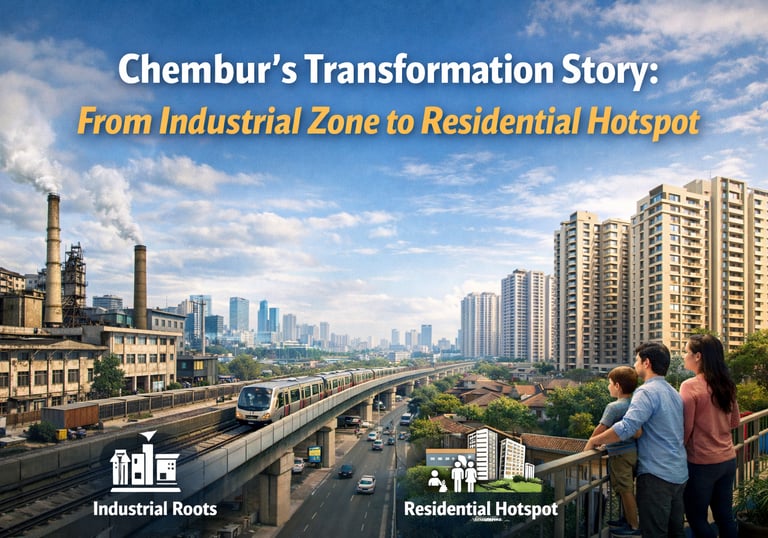
Chembur’s evolution over the past decade is one of Mumbai’s most compelling real estate success stories. What was once perceived primarily as an industrial and working-class area has now emerged as a thriving residential hotspot. Driven by infrastructure upgrades, redevelopment activity, and shifting buyer preferences, Chembur’s transformation reflects the changing dynamics of urban living in 2026. This blog traces the journey of Chembur’s real estate market from its industrial roots to its current status as a preferred residential destination.
2/14/20263 min read
Industrial Origins and Early Character
Historically, Chembur was known for its industrial estates, manufacturing units, and working-class neighbourhoods. Its strategic location near major industrial zones made it a natural hub for workers and labourers. Residential areas were largely utilitarian, with limited lifestyle amenities and modest housing stock.
The suburb’s reputation in earlier years was defined by its functional purpose rather than aspirational living. For decades, Chembur remained on the periphery of Mumbai’s mainstream real estate demand, with most buyers focusing on central and western suburbs for premium living.
Shift in Connectivity and Transport Infrastructure
A turning point in Chembur’s transformation was the significant improvement in transport infrastructure. With enhanced road networks, better bus connectivity, the introduction of metro lines, and strong integration with the suburban railway system, Chembur became more accessible than ever before.
Metro connectivity in particular changed the commuting landscape for residents. Daily travel to business districts such as BKC, Lower Parel, and South Mumbai became faster and more predictable. This improved ease of movement attracted working professionals who were seeking alternatives to congested central suburbs.
Redevelopment Activity Reshaping the Skyline
Chembur’s skyline began to change as redevelopment projects gained momentum. Older, low-rise buildings started giving way to modern high-rise residential complexes. Redevelopment brought contemporary design, superior construction quality, and lifestyle amenities that were previously uncommon in the area.
These new residential projects offered features such as landscaped gardens, fitness centres, community halls, and enhanced security systems. Buyers who were once hesitant to consider Chembur began to view it as a viable choice for long-term living. Families, professionals, and even investors started taking notice of the suburb’s evolving housing stock.
Lifestyle and Social Infrastructure Improvements
As Chembur’s resident base diversified, the demand for lifestyle conveniences grew. Retail outlets, cafes, branded grocery stores, healthcare facilities, and entertainment venues began to proliferate. This expanding social infrastructure contributed significantly to Chembur’s residential appeal.
Schools, colleges, and coaching centres also improved in quality and quantity, making the suburb more attractive to families with children. Parks and recreational spaces added to the quality of life, giving residents opportunities to unwind close to home.
Balanced Demand from Buyers and Tenants
One of Chembur’s distinguishing features in its transformation is the balanced demand from both buyers and tenants. Professionals seeking connectivity, families valuing comfort and community, and investors focusing on rental yield all contributed to steady real estate activity.
The rental market, in particular, became strong due to Chembur’s proximity to employment hubs and transit options. Compact apartments, especially one BHK and two BHK units, experienced high occupancy rates, supporting rental yields and strengthening investor confidence.
Price Growth and Investment Appeal
Property prices in Chembur have appreciated steadily as demand increased. While it still offers value compared to many parts of central and western Mumbai, the suburb’s price performance has been supported by real demand rather than speculative activity. The combination of connectivity, amenities, and redevelopment has reinforced Chembur’s long-term investment potential.
For investors, Chembur presents a compelling mix of capital appreciation and rental income prospects. For homebuyers, it offers liveability without the premium price tag associated with more mature suburbs.
Chembur Today and What Comes Next
By 2026, Chembur stands as a testament to the power of infrastructure-led growth and urban renewal. Its transformation from an industrial zone to a residential hotspot highlights changing market dynamics in Mumbai’s real estate environment. As infrastructure continues to improve and lifestyle demand evolves, Chembur’s relevance as a balanced and future-ready residential location is set to strengthen further.
The suburb’s ability to combine connectivity, liveability, and community appeal makes it a standout choice for buyers, renters, and investors alike. Chembur’s journey shows that strategic development, thoughtful planning, and responsive market demand can redefine a locality’s identity and unlock new real estate opportunities.