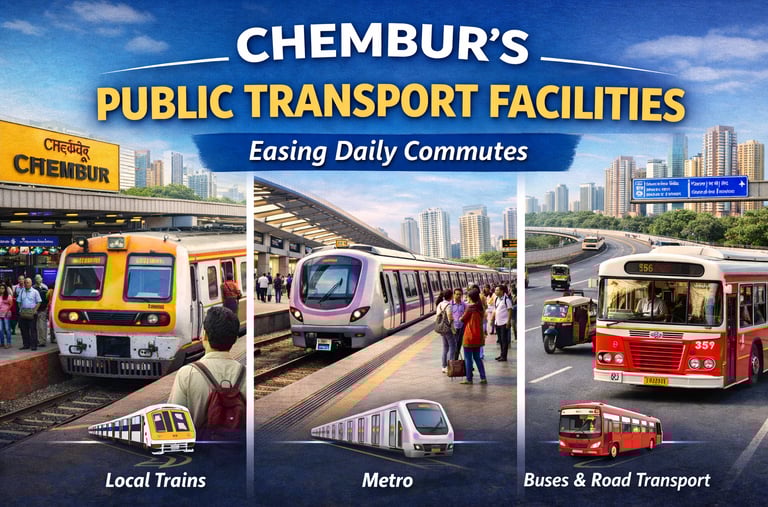
Chembur’s Public Transport Facilities: Easing Daily Commutes
Efficient public transport is a key factor that influences residential choices in Mumbai. Chembur has well-developed public transport facilities, including local trains, buses, and metro connectivity, making it a convenient suburb for daily commuting. In 2026, Chembur’s accessibility via multiple modes of transport enhances its attractiveness for homebuyers, working professionals, and investors. Here’s how public transport contributes to Chembur’s residential appeal.
3/17/20262 min read
1. Local Train Connectivity
Chembur is well-connected through the Mumbai suburban railway network:
Chembur Railway Station provides access to key suburbs across Mumbai
Frequent train services ensure convenient commuting for professionals and students
Integration with other train lines for easy travel to South Mumbai, Bandra, and Powai
Local stations are equipped with basic amenities for passengers
Train connectivity makes Chembur a strategically located residential hub for daily commuters.
2. Metro Network and Feeder Services
Chembur benefits from ongoing metro developments:
Metro lines connecting Chembur to BKC, Ghatkopar, and Andheri
Reduced travel time and congestion compared to road transport
Integration with feeder bus services enhancing first- and last-mile connectivity
Metro stations often surrounded by commercial and residential hubs
Metro access boosts property demand and investment potential in Chembur.
3. Bus and Road Transport Facilities
Chembur has a robust network of road-based transport:
Brihanmumbai Electric Supply and Transport (BEST) buses connecting various suburbs
Availability of private taxis, auto-rickshaws, and cab services
Good road infrastructure with Eastern Express Highway and SCLR for faster travel
Connectivity to major highways leading to South Mumbai and other suburbs
Reliable bus and road transport options complement train and metro connectivity.
4. Impact on Real Estate Demand
Public transport accessibility influences residential choices:
Higher property demand near railway and metro stations
Rental properties in well-connected areas attract professionals and students
Developers highlight proximity to transport hubs in marketing campaigns
Areas with excellent connectivity often witness higher appreciation rates
Connectivity makes Chembur a preferred choice for commuters and investors.
5. Lifestyle and Convenience Benefits
Efficient public transport improves residents’ daily lives:
Reduced travel time allows more leisure and family time
Easy access to workplaces, schools, hospitals, and shopping centers
Encourages sustainable commuting and reduces dependency on personal vehicles
Enhances social and recreational participation by easing movement within the suburb
Residents enjoy a balanced urban lifestyle supported by efficient transport.
6. Future Outlook
Chembur’s public transport infrastructure is expected to grow:
Completion of new metro lines and enhanced train frequency
Expansion of feeder bus networks for better first- and last-mile connectivity
Improved road infrastructure and pedestrian-friendly pathways
Integrated planning of transport and residential development
These upgrades will further strengthen Chembur’s position as a well-connected and accessible suburb.
Conclusion
Chembur’s comprehensive public transport facilities—including trains, metro, buses, and road networks—ensure convenient commuting for residents. Accessibility and connectivity enhance the suburb’s residential appeal, investment potential, and overall lifestyle.
In 2026, Chembur stands out as a smart choice for homebuyers and investors seeking a suburb that offers both modern living and seamless connectivity in Mumbai.